

For as long as I can remember, my mother has always been larger than life. Always taking up space, always louder than what other people deemed acceptable. There wasn’t a moment of her life when she ever felt inauthentic—when she ever felt less than who she was meant to be.
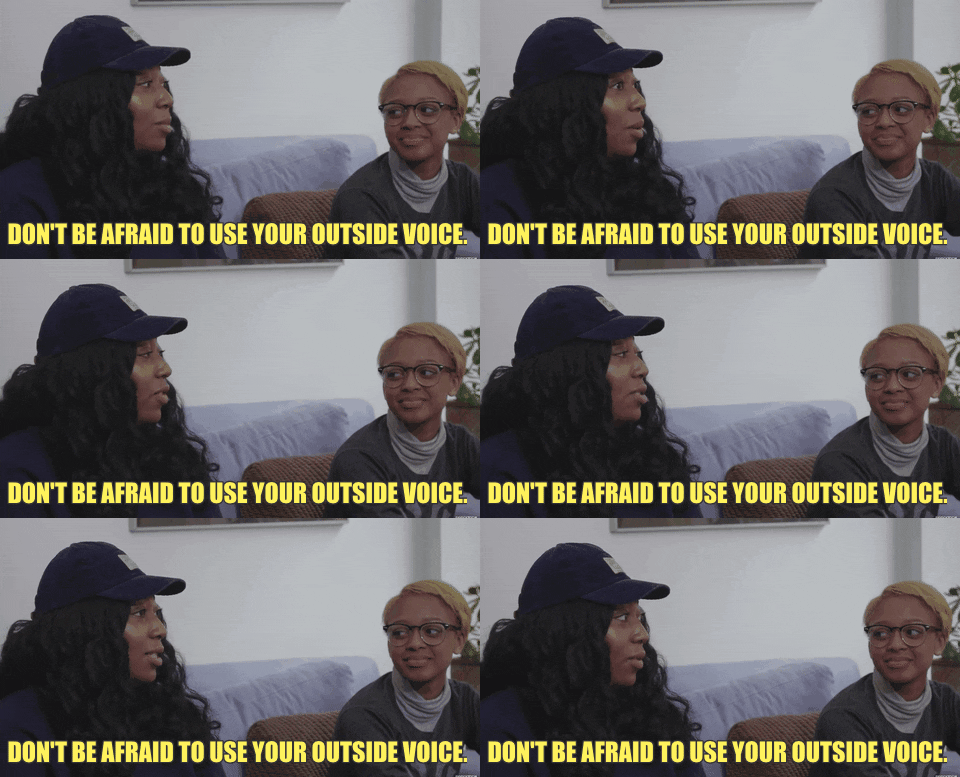
For the past nineteen years, I have been searching for pieces of my mother inside of myself. Unlike my mother, as I grew and grew I seemed to get smaller and smaller. I reverted into myself—I shrunk for the people in my life. When those people left, I didn’t know how to fill those empty spaces back up. It seemed as if (to most people) I was either too much or not enough. I didn’t know how to stop searching for what other people thought they saw in me. Because of this, I became a person who wasn’t wholly themselves.
A large part of this came from how society and the media view Black women today. A majority of us are depicted in a specific light, one that is meant to highlight the “ugly” parts of us and leaves room for nothing else. We all know these women, too—they’re the angry, mean shrews whose sole purpose in life is to make others around them miserable. I didn’t want to be this way. I didn’t want to be ostracized by a society that seemed as if it already had enough reasons to hate me.
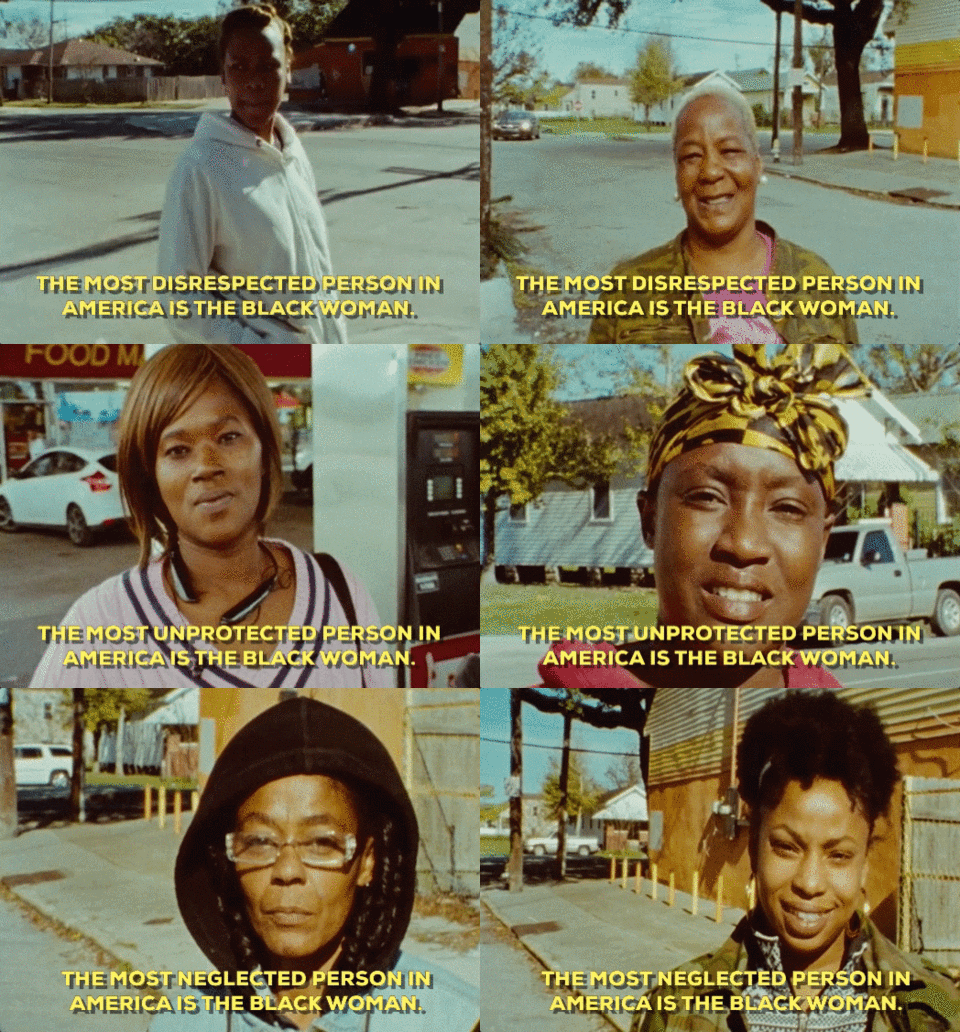
Black actresses who searched for bigger and better roles soon found that there didn’t seem to be too many different ways you could be written into a story. As history has proven us time and time again, Black women aren’t afforded the same luxuries that their white counterparts are. White men are allowed to be angry because it is linked to their masculinity. White women allowed to be angry because it is necessary in order to spark change. When Black women show a hint of anger we’re deemed “hyperemotional”—unhinged. I didn’t know how to escape this stereotype without diluting parts of myself.
“Black women are not supposed to push back and when they do, they’re deemed to be domineering. Aggressive. Threatening. Loud.”
— Professor Jones
Many directors have immortalized the trope that is the “angry Black woman” to further the plot of their story. Non-Black writers, however, aren’t the only people guilty of this—sometimes the crime is committed by the people who know you best.
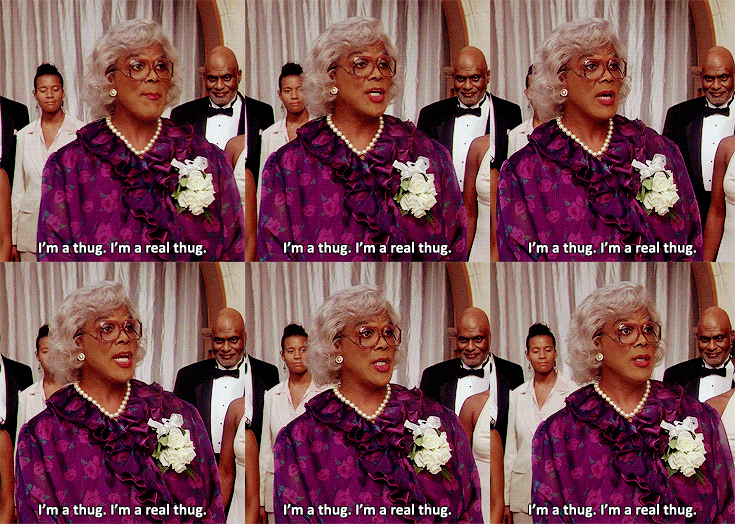
Tyler Perry, a Black filmmaker and actor, has made his fortune on making the modern-day Black woman easier to swallow by making her easier to laugh at. Perry has spent years eternalizing this stereotype of the “angry Black woman” (ABW for short) in a majority of the films that he has written. One of his more famous representations of this trope is the character of Mabel “Madea” Simmons, who is played by himself.
Madea’s character is…questionable, to say the least. She is best known for “getting even in a bad way” (Source). Viewers won’t be able to find one movie where she isn’t threatening to shoot a place up, destroy something, or harm someone physically. The anger is built into her character—she doesn’t know anything else.
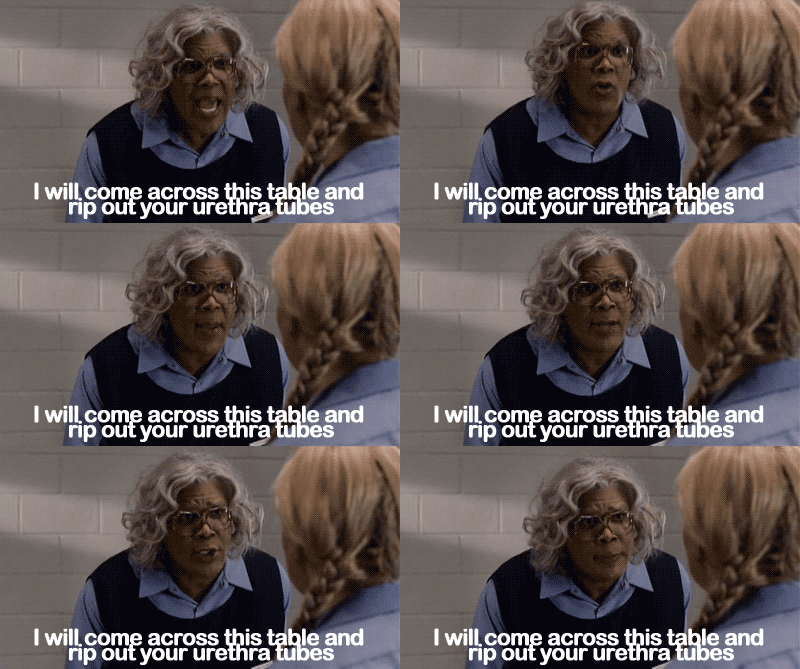
Because this character is notably played by a male, this obviously sparks conflict…and for good reason. In 19th Century America at comic acts and skits, overweight white men would portray Black women by painting their faces black and wearing fat suits. This was “to make them look less than human, unfeminine, ugly” (Source).
Isn’t this exactly what Tyler Perry is doing by depicting his most famous character as an unfeminine, angry, disciplinarian who is sooner to shoot first and ask questions later? Is there no other way for the Black woman’s story to be told? This role hasn’t been met without criticism. Many accuse him of playing directly into Black stereotypes and by perceiving the Black woman as “dim-witted.”
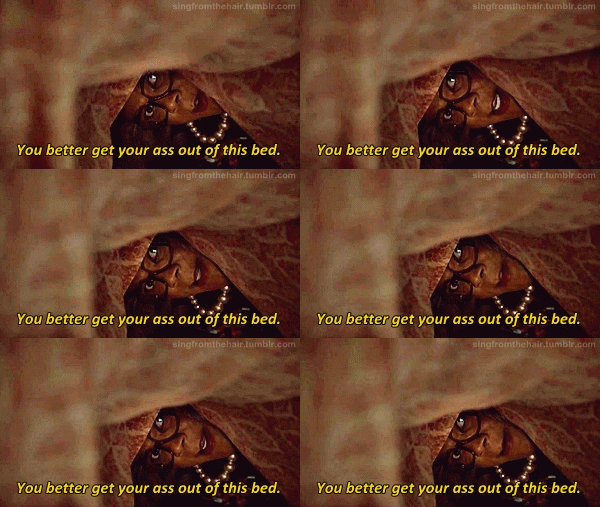
Tyler Perry isn’t the only one to represent the Black woman’s story this way. Like I mentioned before, many other directors are guilty of this misdeed as well. I guess what makes this particular example so bad is that it shows how a Black man perceives a Black woman. A man who, at the heart of it, should be able to understand the struggles and sufferings of a Black woman almost better than anyone. Instead, to make us more palatable, he dons a fat suit and has the audacity to call it “comedy.”
Women in America are told to be seen and not heard. Are told to squash our feelings lest they get the better of us. However, Black women are expected to act irrationally, to have anger as their sole emotion. But, to own this emotion is a seemingly dangerous thing. How was I supposed to balance these two halves of myself? Why should I have to separate my Blackness from my womanhood? The answer to both: I’m still learning. I’m still growing. I’m still searching for the generations of Black women within me who refused to silence or lessen themselves to make others around them comfortable.
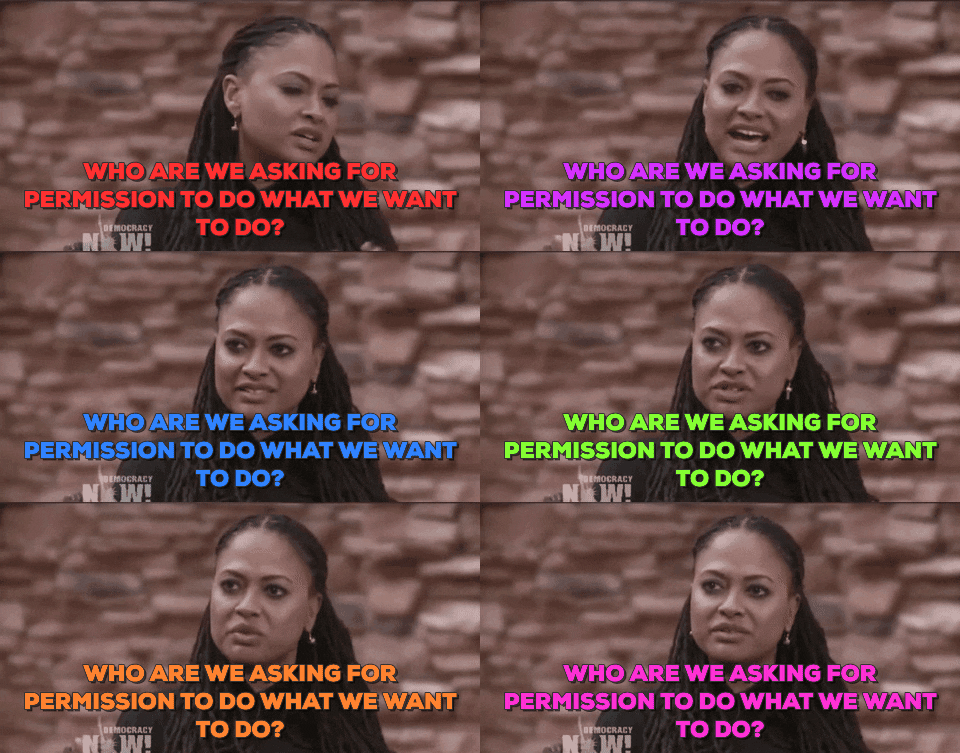
Even today, I still struggle with speaking up and letting my voice be heard. I still struggle with the belief that I deserve to be here—that I deserve to take up space. I always have this voice in the back of my head that lets itself be known before I even have the chance to speak. It asks, “How can I make myself seem less assertive? Less bitter, mad? More approachable? More white?”
Whenever I get into that negative headspace, I always think of my mom. I think about how she never asks herself whether or not she deserves to be heard. I think about the big and bold way she chooses to live her life, every day. So, for this and a million other things, thanks, Mom.
 BLACK-PLOITATION