

I spent most of my time growing up being conflicted. It seemed as if I was always fighting between two opposing halves of myself. One half loved reading books and watching science-fiction movies; the other enjoyed listening to 90s rap with her mom and trying to figure out what the hell Missy Elliot was saying in Work It (it was not, in fact, gibberish). It was only until I was halfway through high school that I realized I didn’t have to choose.
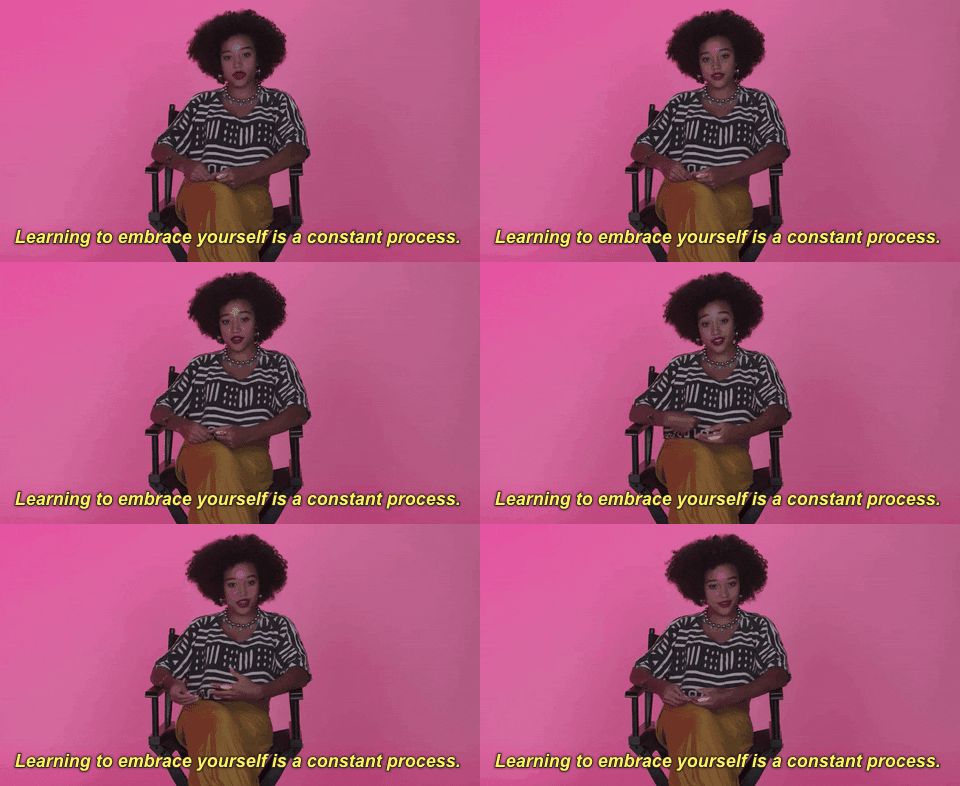
I could be whoever I wanted to be. I could be the nerd who had a Harry Potter poster on her wall but still knew all the words to her favorite rap songs. I could be the person at the Kendrick Lamar concert who felt comfort in knowing that—by the end of the night—she’d be in bed watching the Star Wars reruns on TV. (I want to say that if I could do anything, it would be to apologize to my younger self. She always felt as if she wouldn’t be enough for anyone if she didn’t choose. I’m sorry I let people make us feel that way.)
I want to thank the film Dope for helping me realize that I could love and nurture the two halves of myself without compromising who I was.
“It’s not a ‘hood film or romantic comedy or Tyler Perry. It’s like there’s only two or three things black films can be, and it’s none of those.”
—Rick Famuyiwa, Director of Dope
Dope was a refreshing story in a time where it seemed as if there was only a set number of ways the Black experience could be represented. The movie successfully manages to take the world of Black nerd culture and show it through a modern lens. It follows Malcolm, resident nerd and 90s hip-hop connoisseur, and his two friends Jib and Diggy as they navigate their neighborhood that is riddled with gang violence and drug use.
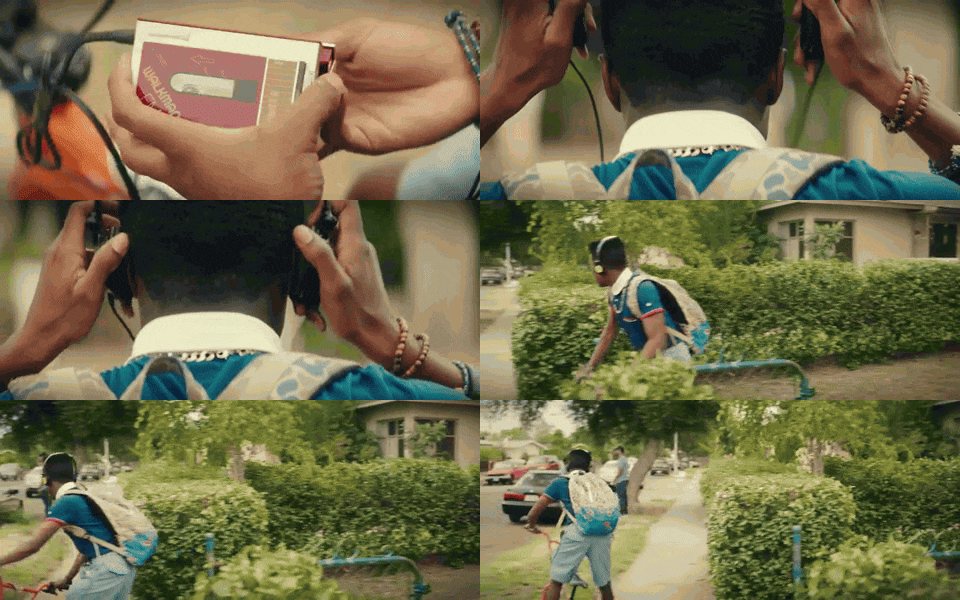
In modern-day Inglewood, California, Malcolm is “painfully out of place.” He’s the outsider—the kid who tests well above most of his classmates and is in a punk-rock band with his friends yet listens to old rap albums on his cassette player and has a flat-top haircut. However, while at a party, Malcolm has a run in with a local drug dealer named Dom (who is played by A$AP Rocky) who forces him to deliver a bookbag full of drugs for him.
From then on, the film explores the merging of two identities that, as it turns out, don’t have to be mutually exclusive. As Malcolm struggles with what to do with the bag, he ventures down a path that shows him what life would be like if he conformed to what society would expect of a man growing up in that type of environment. As the film progresses, his journey takes him down a path of drug-dealing and shoot-outs. But, Malcolm doesn’t want a life like this. Instead, Malcolm dreams of attending Harvard University—an aspiration that is laughed at by mostly everyone in the film.
“When you don’t fit in, you’re forced to see the world from many different angles.”
— Malcom, Dope
Much like Malcolm, I have struggled with the dichotomy between self-expression and Black, societal expectations. My family forced me to choose between these two identities. My family, mainly my cousins, believed that because I wasn’t fully abiding by the Black community’s expectations for a young, Black woman, I wasn’t wholly Black. They thought that because I had white friends and listened to white artists, I lacked the capabilities necessary to be “Black.” They made jokes about me in front of my friends and other family members. They told me I wasn’t Black enough or, better yet, wasn’t Black at all.

There was no reprieve from this, even with my “friends.” I’ve had numerous white people come up to me and tell me that the reason they liked me so much was that I “wasn’t like other Black girls.” I wasn’t “ghetto,” I spoke in grammatically correct sentences, I understood pop-culture references. They said this to me as if it was a compliment—as if I was supposed to be grateful for the way they stripped me of my identity and painted me as someone else.

Because of my premature identity crisis, I—as I so often have done before—tried to change who I was for the betterment of others. I tried to keep my interests a secret at home. I tried to laugh more when my cousins asked me why I couldn’t take a joke. When someone would ask me if I had a favorite movie, I would say something stereotypical instead of what it truly was. When people asked me where I wanted to go to college or what I wanted to major in, I shrugged indifferently. I did what was expected of me. I evaporated.
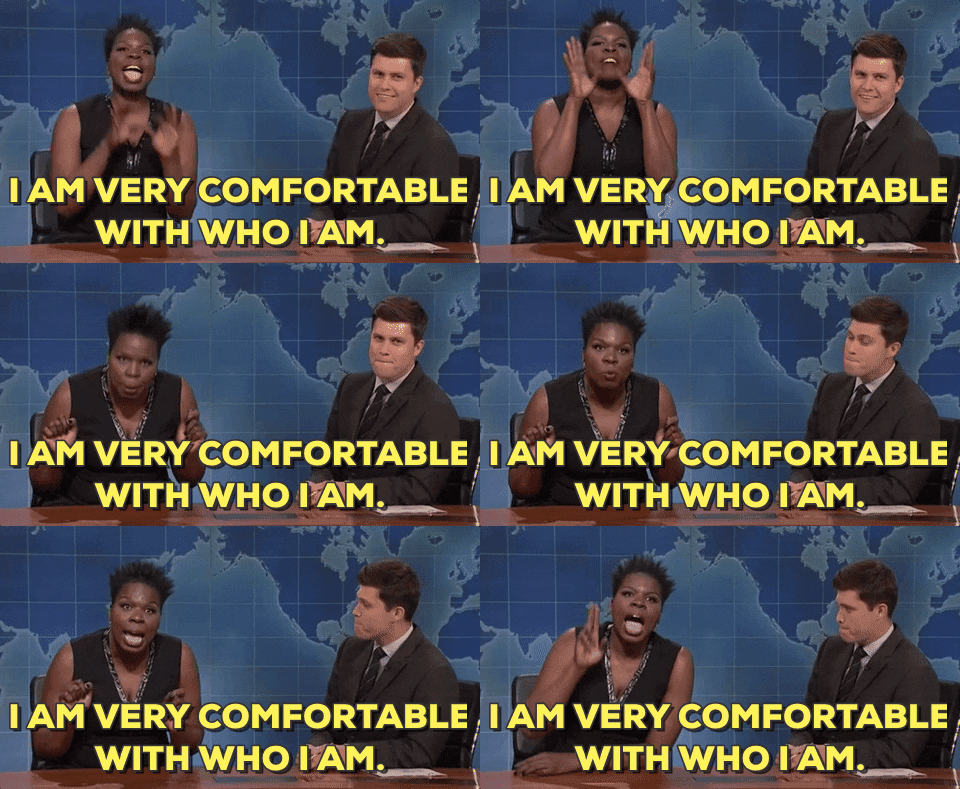
But, it was only until I was well into my Sophomore year of high school that I had a shocking realization: why should I have to compromise what I liked to please others? They surely weren’t doing it for me. So, I said “fuck it.” If you’re going to piss people off, you might as well do it by being wholly and authentically yourself. Dope helped me realize that yes, being Black and liking rap music can be mutually exclusive. Do I enjoy rap music? Of course. But not because anyone told me to. Not because it’s expected of me as a Black person. I love it because it’s who I am—it is one of my favorite forms of self-expression. Would I still be Black if I didn’t enjoy rap music? Of course, because the only boundaries I have are the ones I set for myself.
So, I want you to ask yourself: who would you be if no one was watching? Who would you be if you didn’t force yourself to conform to expectations that are meant to define you? Can you envision that person? Good. Now go and be that person. You will never experience a more satisfying feeling. I guarantee it.







 BLACK-PLOITATION
You must be logged in to post a comment.