

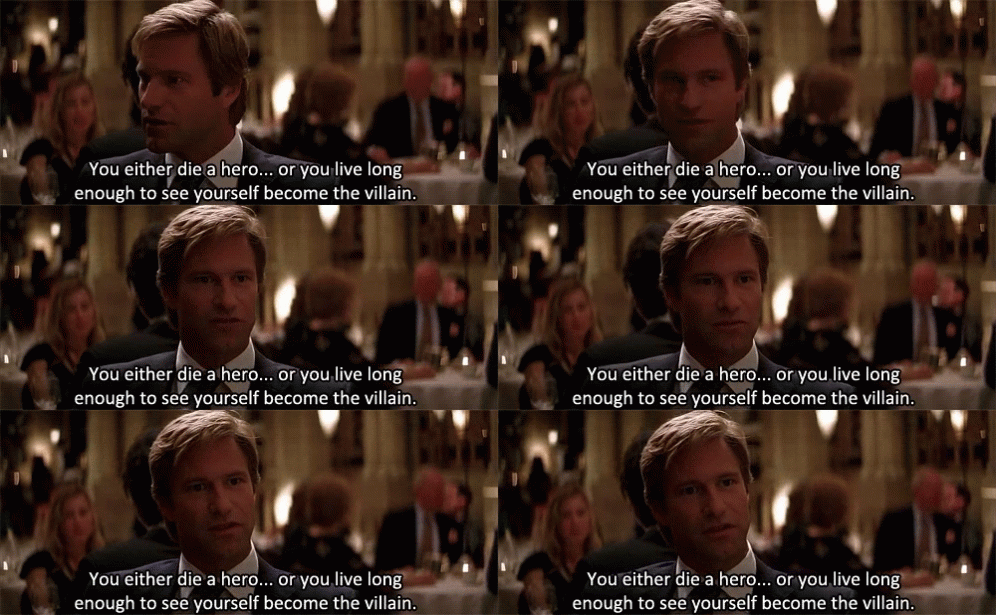
If there is one thing I know, it’s that the first requirement to becoming a world-renowned superhero is that you gotta have one damn good backstory. (The more tragic, the better.) What makes such a captivating backstory is—of course—the villains. These people are specifically bred to make the superhero’s life difficult. They scheme and murder and lie in order to present the hero with a series of problems they never foresaw or deemed themselves capable of handling. Can you even imagine Superman without Lex Luthor, Batman without the Joker, or Spider-Man without the Green Goblin? We can’t—because film writers managed to craft these three-dimensional villains who, at the heart of it, just want to be loved. In the worst possible ways.
Every villain tests the moral capacities of their counterparts. They blur the lines for the superheroes between what is right and wrong, testing their intrinsic values. They are guiltless, wicked, and all-around vicious characters. And we love to hate them. Because…a hero is only as good as their villain.
Hollywood has provided us with plenty of great villains, each more nefarious and morally compromised than the last. However, what it’s mainly lacked, is three-dimensional villains who are, well…Black. I know, I know—I’ve repeatedly mentioned how films paint Black characters into these villainous roles that render them victims to poor stereotyping and typecasting.
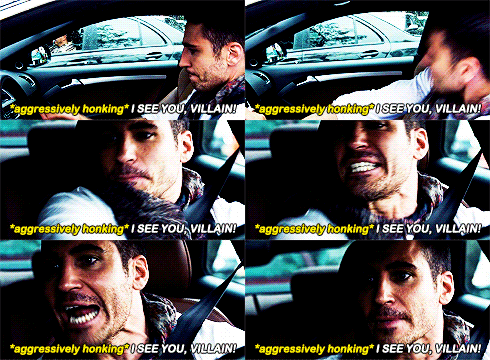
But, some movies manage to do it really, really well. In a way that has nothing to do with race. Or stereotyping. Or if race dictates a large, important part of who the villain is, they aren’t portrayed in the typical way that most Black bad guys are described on screen. They’re three-dimensional, with goals and painful backstories that led them to where they are today. They’re just as memorable as white villains, if not more so.
I personally have a top-three favorites list of villains who have been particular pains-in-the-asses for their designated hero. When I first saw them on the big screen, I knew that I wouldn’t be able to forget them anytime soon.
*Spoilers, I guess?*
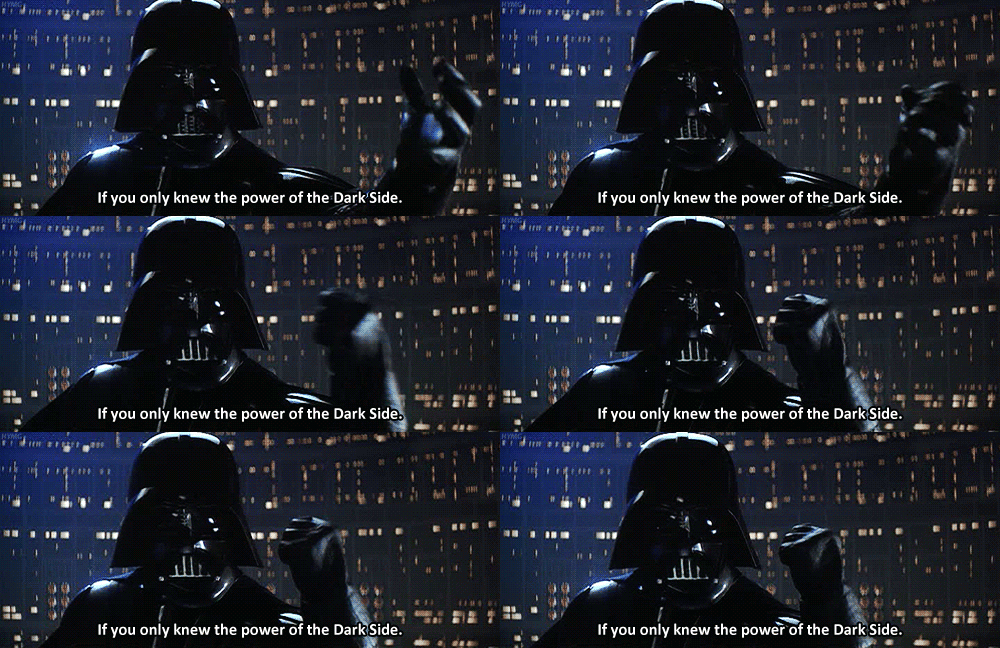
My first is our favorite intergalactic villain. I never really got into the Star Wars series until I was well into high school (my senior year), but when I did, I was hooked. Despite the fact that the movies’ chronological history was a bit confusing (seriously, was I supposed to watch the original trilogy first or the prequels? There have been small wars started over this debate) and that they were all over two hours long, these timeless films have resonated with millions of people all over the world. For good reason, too. The painful backstory of our resident bad boy, Anakin Skywalker, still brings a tear to my eye when I think about how he was led astray. It’s true, he did a lot of bad things—but he believed that they were for the right reasons. Isn’t this the logic behind most villains’ choices?

Darth Vader is included in my personal list of Black villains because he was actually voiced by James Earl Jones, a Black actor (so he technically still counts). He didn’t get a lot of credit or prestige for this role (we mainly recognize him from The Lion King as Mufasa), but the character itself is one of the most unforgettable roles in film.

Darth Vader was such an exceptional villain because he was very familiar with the duality of once being a hero and now being the bad guy. He was the protagonist in his own story and the antagonist in another’s. He battled with light and dark, good and evil, and deciding between what he was supposed to do and making his own choices. His greatest foes were literally his son (gasp) and his former Jedi master. He did terrible things under the guise of Darth Vader, such as dismemberment, torture, and mass murder. Did he feel bad about what he had done? Hmm…debatable, because in his mind he was doing all of these things for one all-encompassing emotion—love. How many bad guys can say that?

I’m pretty sure you should’ve seen this coming. I don’t think I can write a blog about debunking Black stereotypes without talking about a film that basically raised the middle finger to all of them. Michael B. Jordan’s Erik Killmonger in Black Panther introduced an entirely new villain to modern-day cinema. I particularly like Killmonger’s character because he knew that he had to become a “necessary evil” in order to shape the world in the way he deemed fit. A world where Blacks weren’t being pushed down, where innocents weren’t suffering at the hands of their oppressors daily.
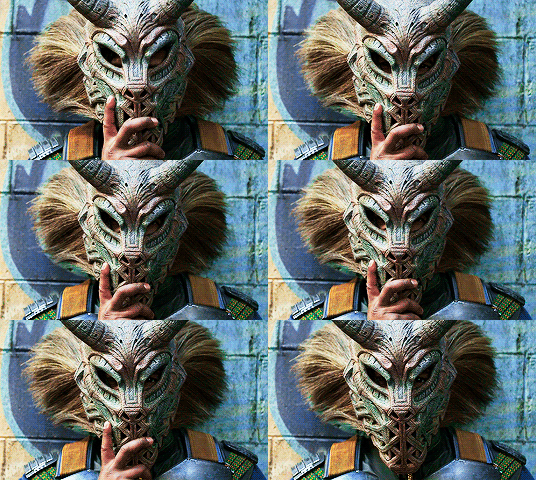
He’s a character in which we all can empathize with. He was stripped of his childhood early on by the people his father trusted the most—his own family. Killmonger had to lie and plot and kill with the best of them because he honestly believed he was doing what was necessary to make things better for his people. Sure, he probably didn’t go about it in the best way, but I never said he wasn’t flawed.
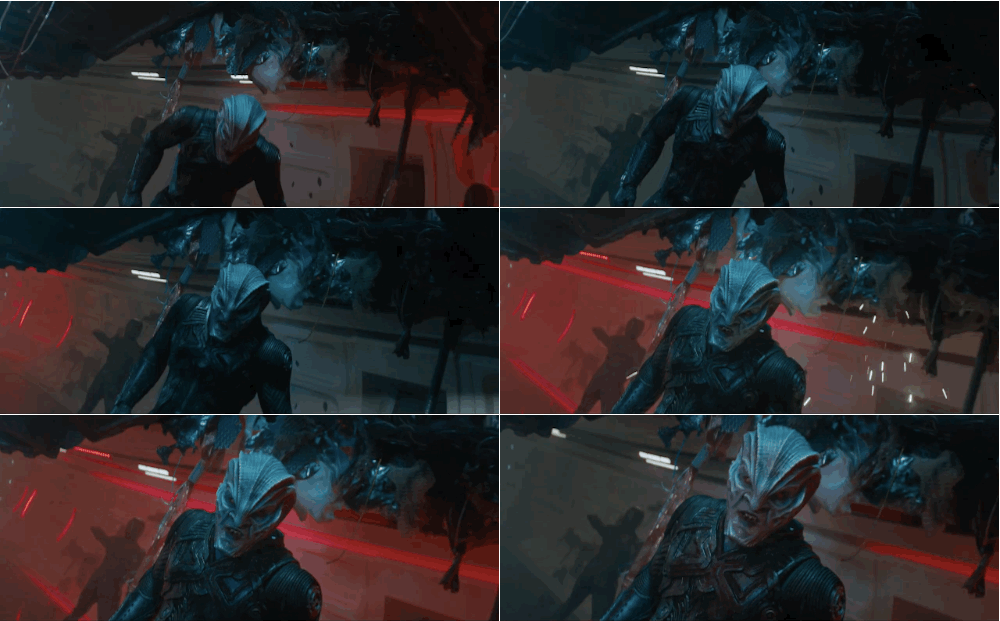
Last but certainly not least is the one-and-only Krall/Balthazar Edison from Star Trek Beyond, played by Idris Elba. Krall’s backstory is albeit a painful one: Edison was a human-turned-alien who once fought for the Federation Starfleet. His resentment towards the Federation soon blossomed into animosity and hatred when they began breaking bread with their enemies.
While on a mission, he and his crewmates are trapped on a distant planet with dwindling resources. After calling for help and receiving no reply, Edison finds a device that allows him to prolong his own life—but he has to “drain” others in order to do it (Source). So, Edison willingly turns himself into the alien “Krall” in order to seek revenge on the government who left him and his crew to die.

What makes Krall such a reputable villain is how particularly human he was. His motivation (in his mind, at least) was pure—he was fighting to prove that alliances ultimately made people weak. Driven by the loss of his crew and the reality of his own unfortunate fate, he turns himself into what he thought the galaxy needed most: a monster. And he makes such a good one.
What I particularly love about all of these villains is that (for two out of three) their Blackness doesn’t define them. Krall would’ve been the same villain if he was a white guy. He would’ve had the same motivations, the same painful backstory that turned a revered hero into a monster. Darth Vader would have still had the same breathy, dark timbre of voice we all love so much. In Killmonger’s case his Blackness did define him. But he wasn’t portrayed in this ugly light. The writer’s characterized him in such a way that wouldn’t let the audience hate him. Instead, we sympathized with him.
“What we don’t need are more one dimensional depictions that rely on stereotypes or black villains with black culture cropped out.”
—Shabazz Malikali
I don’t mind seeing Black people painted as bad guys. It becomes a problem, however, when they are painted in such a negative light that they’re not even human anymore. They’re the stereotypical thugs and criminals that we have been watching on the screen for years. And we don’t like those guys; we can’t relate to them. So, Hollywood, give me more Black villains I can relate to. More three-dimensional, flawed, immoral characters who not only make me love-to-hate-them, but make me understand them as well.



 BLACK-PLOITATION
You must be logged in to post a comment.